
Merchant Account for Online Payments: Secure Digital Transaction Processing
Merchant account acts as teh bridge between your customers' credit cards and your bank, enabling smooth digital transaction processing every single day.
Whether you're launching a new store or scaling an existing brand, understanding how these accounts work helps you accept payments confidently. Let's break down everything you need to know about setting one up, reducing credit card processing fees, and building a secure checkout experience.
How Digital Transaction Processing Works
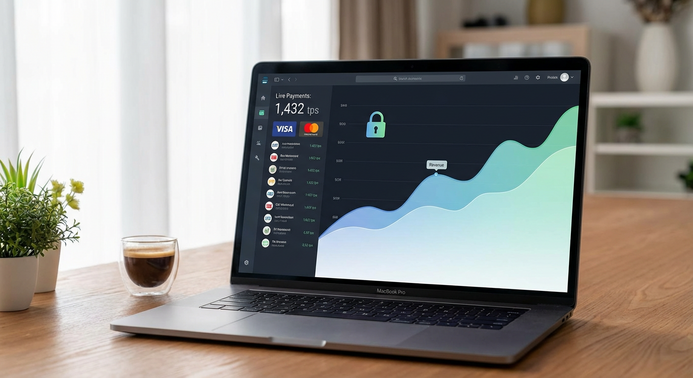
At its core, a merchant account holds funds temporarily after a customer completes a purchase. Once the card network verifies the transaction, money moves into your business bank account. This entire cycle typically takes 24 to 72 hours, depending on your provider and agreement terms.
The Role of Payment Gateway Integration
A payment gateway acts as the digital equivalent of a point-of-sale terminal. It encrypts sensitive card data, sends it to the acquiring bank, and returns an approval or decline response within seconds. Without proper payment gateway integration, your store simply can't process purchases online. Most modern gateways support multiple currencies and fraud detection tools, making them essential components of any e-commerce payment solution.
Authorization and Settlement Explained
Authorization happens instantly when a shopper clicks "buy." The issuing bank checks available funds and either approves or rejects the request. Settlement, on the other hand, occurs in batches—usually at the end of each business day. During settlement, approved transactions get funded to your merchant account before transferring to your primary bank. Understanding this two-step flow helps you anticipate cash flow timing more accurately.
Choosing the Right E-Commerce Payment Solutions
Not every provider offers the same features, pricing, or level of support. Picking the wrong one could cost you thousands annually in hidden charges. Ever wonder why some businesses switch providers after just a few months? It often comes down to poor research upfront.
Comparing Pricing Models
Credit card processing fees vary widely. The three most common structures include:
- Flat-rate pricing: A fixed percentage per transaction, ideal for small businesses.
- Interchange-plus pricing: The actual interchange cost plus a small markup—transparent and often cheaper at higher volumes.
- Tiered pricing: Transactions grouped into qualified, mid-qualified, and non-qualified categories. This model tends to be the least predictable.
Always request a full fee breakdown before signing any contract. Look out for monthly minimums, PCI compliance charges, and early termination penalties.
Evaluating Provider Reputation
Read independent reviews, check Better Business Bureau ratings, and ask fellow business owners about their experiences. A provider might advertise low rates but deliver terrible customer service. Prioritize companies offering 24/7 technical support, especially if you sell internationally across different time zones.
Building a Secure Checkout Experience
Trust drives conversions. If shoppers don't feel safe entering their card details, they'll abandon the cart—no questions asked. Studies show that nearly 18% of cart abandonments happen because of security concerns.
PCI DSS Compliance Essentials
The Payment Card Industry Data Security Standard outlines requirements every business handling card data must follow. Key obligations include maintaining a secure network, encrypting cardholder data during transmission, and conducting regular vulnerability scans. Your merchant account provider should help you meet these standards, but ultimate responsibility still falls on your shoulders. Don't overlook annual self-assessment questionnaires—they're mandatory.
Fraud Prevention Tools That Matter
Modern e-commerce payment solutions bundle several anti-fraud features:
- Address Verification Service (AVS) matches billing addresses against card records.
- CVV verification adds another authentication layer at checkout.
- 3D Secure protocols like Visa Secure and Mastercard Identity Check shift liability away form your business during chargebacks.
- AI-powered risk scoring flags suspicious orders before they're approved.
Implementing multiple layers creates a secure checkout experience that protects both your revenue and your customers' data.
Scaling Payments as Revenue Grows
What works at $5,000 monthly revenue won't necessarily hold up at $500,000. Growth demands better infrastructure, lower per-transaction costs, and more sophisticated reporting dashboards.
Negotiating Lower Credit Card Processing Fees
Once your transaction volume increases, you gain leverage. Approach your provider and request reduced rates—most are willing to negotiate rather than lose a profitable client. Benchmark your current fees against industry averages. Businesses processing over $50,000 monthly should target interchange-plus pricing if they haven't already switched.
Multi-Currency and Global Expansion
Selling internationally requires payment gateway integration that supports dynamic currency conversion. Shoppers prefer seeing prices in their local currency, and offering that option boosts conversion rates significantly. Additionally, ensure your provider supports region-specific payment methods like iDEAL in the Netherlands or Boleto in Brazil. A one-size-fits-all approach rarely works when expanding into new markets.
Conclusion
Setting up a merchant account doesn't have to feel overwhelming. Focus on transparent pricing, robust security, and scalable infrastructure. Compare multiple providers, negotiate credit card processing fees as volume grows, and invest in a secure checkout experience. With the right e-commerce payment solutions and proper payment gateway integration, your business stands ready to accept digital transaction processing confidently—today and well into the future.